Google Cloud's latest Cloud Next announcement is a useful signpost for where AI-assisted development is heading next. The company is no longer talking only about chatbots that help write snippets or answer questions. It is packaging agent creation, model selection, DevOps, orchestration, security, and governance into a single platform aimed at technical teams building production systems.
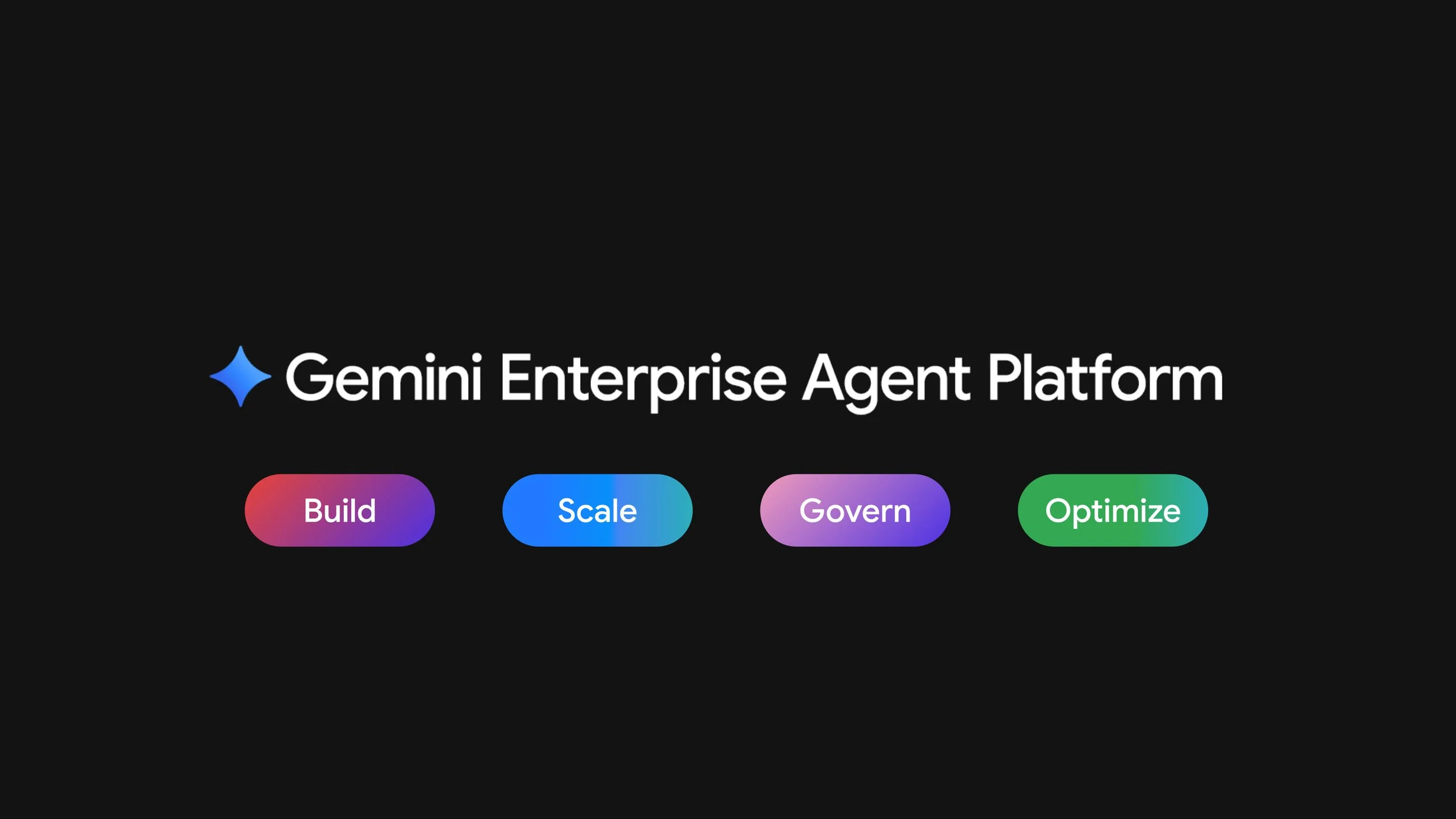
The headline product is Gemini Enterprise Agent Platform, which Google describes as a new developer platform for building, scaling, governing, and optimizing agents. That framing matters. It suggests the center of gravity is shifting away from a single coding assistant inside an editor and toward an enterprise stack that can manage many agents across many workflows.
Why this matters for developers
For software teams, the practical question is not whether an AI model can generate code. That part has already been proven. The real question is whether the generated code, surrounding workflows, and downstream actions can be controlled well enough to ship in production. Google is explicitly trying to answer that with a platform that brings together model selection, agent building, integration hooks, runtime, and security controls.
That is a notable evolution in the AI-code market. The first wave of tools made typing faster. The second wave made entire tasks semi-autonomous. The next wave appears to be about operational trust: who can build an agent, what systems it can reach, how it is audited, what memory it keeps, and how it is governed once it starts touching real business data.
A platform, not just a model
Google says the platform combines Vertex AI capabilities with new features for agent integration, DevOps, orchestration, and security. It also offers code-first and low-code paths through Agent Development Kit and Agent Studio. That combination is important because AI-assisted development is no longer one workflow. Some teams want to prototype visually. Others want to keep everything in code, version control, and CI/CD. A serious platform has to support both.
The company also emphasizes model choice. Alongside its own Gemini models, the platform supports a broad menu of third-party options. That is a strategic signal in itself: buyers are increasingly wary of locking their developer workflows to a single model or a single vendor. If one platform can provide routing, governance, and evaluation across multiple models, it becomes more attractive to platform engineering and AI infrastructure teams.
From copilots to controlled agents
One way to read this announcement is that the industry is formalizing the transition from copilots to controlled agents. Copilots helped individual developers write code faster. Controlled agents are meant to work across systems, remember context, take actions, and stay within policy boundaries. That is a much harder problem, and it explains why enterprise buyers are now asking about identity, registries, gateways, memory, auditability, and long-running execution.
Google's message is that agent systems need more than model quality. They need a runtime that can keep state, a registry that can enumerate what exists, and a gateway that can enforce permissions and governance. In other words, the platform is trying to treat agents like real software components rather than disposable prompts with a nicer interface.
The developer workflow angle
There is also a very direct impact on day-to-day engineering work. If AI-native coding is built into the platform, developers can move more quickly from prototype to deployment without stitching together half a dozen separate tools. Teams can keep agent logic, policy, and operations closer together. That reduces the hidden tax that often shows up after the demo: brittle integrations, manual approvals, unclear ownership, and untracked model changes.
For AI-assisted development teams, this matters because the bottleneck is moving from generation to governance. A useful coding assistant is easy to admire. A useful production platform is harder to run. The platform approach is Google's attempt to make those two problems overlap: build faster, but also standardize how agents are reviewed, deployed, and monitored.
What to watch next
The key metric will be whether teams adopt the platform as a shared control layer, not just another AI playground. If that happens, the market may start to look less like a battle of standalone coding tools and more like a competition between enterprise agent platforms. In that world, the winners will be the vendors that can combine model quality, developer ergonomics, security, and integration depth.
Google's latest announcement suggests it wants to compete on all four at once. That makes the story bigger than a feature release. It is another sign that AI-assisted development is becoming a platform layer, and that the most valuable products may be the ones that help enterprises govern agents as carefully as they now govern code.