A click is not an authorization contract
A developer lets a coding agent write a harmless scratch file. Later, the same tool targets a sensitive system file, without asking again. The interface still advertises human approval, but the human has not approved the second action. This is the practical distinction software teams need to examine as agents move from proposing code to operating development environments: keeping someone in the loop requires preserving the scope of their decision all the way to execution.
An October update in GitHub's Advisory Database makes the issue concrete. The PraisonAI advisory GHSA-29r9-67vg-qj56 describes an approval cache keyed on the tool name rather than its arguments. Alongside a September research preprint on approval laundering, it offers a useful agenda for teams evaluating agent permissions. The lesson is not to add confirmation dialogs everywhere. It is to ensure that an approval cannot quietly become a broader permission.
What the advisory actually establishes
The maintainer's advisory was published on June 25, 2026; the GitHub database entry was reviewed and updated on October 8. This is therefore a recently revisited vulnerability, not a newly discovered attack today. The maintainer lists praisonaiagents versions up to and including 1.6.77 as affected and versions from 1.6.78 as patched. Teams using that package should check the version actually deployed, including packaged environments and automated workers, rather than trusting a developer's latest local installation.
According to the advisory, the first approval was stored for the agent run and reused for subsequent invocations of the same tool. Arguments were absent from the cache key, and child tasks inherited the context. An important qualification: critical-tier tools, including execute_command and execute_code, were exempt from this cache. The documented failure concerned tools such as write_file; it does not establish that every execution tool silently bypassed confirmation.
Why the harmless-file example matters
The advisory demonstrates an initial request to write /tmp/safe.txt, followed by a request to write /etc/crontab. The second request receives approval from the cache rather than another human prompt. These paths illustrate an authorization mismatch; whether a real process can modify the second location also depends on operating-system permissions. Approval logic does not create privileges the process lacks, but it can misuse privileges the process already possesses.
That distinction matters on ordinary developer machines. A process may lack access to system configuration while retaining write access to repository workflows, shell startup files, local agent settings, or deployment scripts. A boundary failure can therefore matter without administrative access. The relevant question is not simply whether an agent can become root. It is whether the agent can redirect an already authorized capability toward a resource the person never agreed to change.
Authorize an action, not just a verb
For a consequential operation, an approval should identify enough context to distinguish the proposed action from nearby alternatives. Depending on the tool, that includes the resource, arguments, destination, working directory, environment, agent identity, and duration. A file edit may also depend on the content or diff being approved. A deployment approval must distinguish a preview environment from production even when both operations invoke the same command.
This is an engineering recommendation, not a claim that every field needs its own dialog. Teams can define narrow standing permissions for repetitive work. For example, an agent may create generated files inside a disposable workspace for the duration of one task. The contract should say so explicitly. A person who approves a bounded class of operations is making a different decision from someone who approves one particular file write.
Research broadens the question, with limits
The September 30 preprint Approval Laundering: Systematizing Approval–Execution Binding Failures in AI Coding-Agent Harnesses studies how an approved action can diverge from what a harness executes. It proposes categories covering scope, arguments, timing, tools, delegation, and semantics. This is a working draft, explicitly not yet submitted for review in the version examined. Its controlled experiments are not evidence that every current commercial agent has the same defect.
Its useful contribution here is the question it makes testable: does execution remain inside the declared approval contract? The paper also reports limits to its proposed token-based defense. Binding recorded dispatch fields cannot by itself guarantee downstream effects when a subprocess or a changed environment alters what the same invocation does. Teams should take the framework as a source of test ideas, not purchase or deployment assurance, and keep the advisory's concrete finding separate from the preprint's broader research claims.
The environment is part of the action
Identical command text can behave differently after a script changes, a dependency is replaced, or a working directory shifts. Likewise, an unchanged path may refer to another resource after a symbolic link is modified. Recording an argument hash can help detect changed arguments, but it does not prove that every external dependency or resolved target is unchanged. This is why approval binding and environment isolation solve different parts of the problem.
For sensitive operations, resolve targets carefully and minimize mutable dependencies between review and dispatch. Run builds and experiments in disposable environments with limited credentials. Where feasible, attach approval to a specific revision and artifact rather than an informal description of the task. These measures do not make execution perfectly predictable. They reduce the number of ways an unchanged-looking request can acquire a meaning the reviewer did not consider.
Delegation must not silently expand authority
A parent agent may ask another agent to investigate a bug or prepare a patch. That delegation should not automatically copy a person's earlier consent into a new context. The child might operate in another repository, select a different tool, or continue after the original task has ended. In the PraisonAI advisory, approval context inheritance was part of the documented behavior, making this more than a theoretical concern for orchestration systems.
A practical policy separates permission to delegate analysis from permission to execute privileged changes. Child agents can return proposals and evidence to a supervising workflow. If they need write or network access, the runtime should grant a bounded capability deliberately, with a clear principal and expiration. Humans should remain able to tell who requested an operation, which agent performed it, and under which policy it was allowed. A shared account name alone cannot explain that decision chain.
Test the boundary with negative cases
Teams evaluating an agent framework should add authorization regression tests alongside ordinary functional tests. Use disposable fixtures, fake credentials, and a recording approval backend. Never exercise a demonstration against actual system files. The acceptance criterion is not merely that the first prompt appears: it is that the runtime rejects or re-prompts when an operation falls outside the approved scope, before any unintended side effect occurs.
- Approve one test-file write, then change the destination and inspect the decision.
- Keep the destination but change the content or selected environment.
- Repeat the operation after expiration, task completion, or a new session.
- Attempt the operation through a child task with a different identity.
- Modify the target resolution or script between approval and execution.
Not every variation must require a new prompt under every policy. A standing grant may intentionally cover some changes. Tests should encode that declared contract and expose accidental expansion rather than assume that single-use approval is the only legitimate design.
Make the review screen honest and usable
Precise enforcement is necessary, but the person also needs a comprehensible decision. Show the relevant diff, resolved destination, environment, and reason escalation is required. Separate a one-time approval from a scoped permission and from a lasting policy change. Do not present them as interchangeable ways to dismiss the same warning. In particular, approving a task should not quietly enable permanent tool access.
Reducing noise is compatible with human control. Routine operations can run under pre-established least-privilege policies, while exceptional actions receive focused review. The interface should make the remaining uncertainty visible instead of displaying a reassuring summary that hides material arguments. If the reviewer cannot determine the likely impact, the appropriate response is to narrow the request or obtain evidence, not to ask them to accept responsibility for a decision they cannot actually inspect.
Keep evidence without creating another leak
A useful audit trail connects the proposal, the approval or policy decision, and the action actually dispatched. Record the relevant identity, scope, timestamps, revision, and outcome. Distinguish explicit human approval from an automatic allowance under a standing policy. The phrase “approved” alone is insufficient when responders later need to determine whether someone inspected the operation or whether a cache authorized it.
Logging everything indiscriminately creates its own risks. Tool arguments may contain secrets, customer data, or private source code. Apply access controls, retention limits, and appropriate redaction; record structured references where raw content is unnecessary. Protect the evidence store from the agent whose actions it documents. Otherwise, a workflow may appear auditable while allowing its executor to erase the very records needed to investigate an approval-boundary failure.
A practical rollout for software teams
Start with an inventory of agent frameworks, versions, approval modes, credentials, and execution environments. For affected PraisonAI installations, move to a patched version and verify the behavior in the deployed configuration. Updating closes a documented vulnerability going forward; it does not establish what happened in previous sessions. Where historical exposure is plausible, review accessible logs and sensitive changes without assuming that the advisory proves an actual compromise.
Then select one representative workflow and write its permission contract in ordinary language. Identify what the agent can do alone, which changes require a person, and what ends the grant. Translate that contract into executable tests and runtime restrictions. Roll out in a disposable environment before granting production-adjacent access. Keep separate human review and release controls: a tool-use approval is not approval of the resulting software, and passing tests is not authorization to deploy it.
Human control is a property of execution
The point of a coding agent is to reduce mechanical effort, not to make every keystroke a governance event. Well-designed standing permissions can support substantial autonomy. What must remain explicit is the boundary: an agent should not convert permission for one action into permission for a different resource, identity, or period merely because the tool name stayed the same.
The October advisory update and September preprint offer complementary prompts for action: fix a documented cache problem, then examine the broader approval-to-execution chain. Human-in-the-loop engineering succeeds when the person can understand the consequential decision and the runtime preserves it. A visible confirmation button is only the beginning. The real safeguard is that what runs remains what was authorized, within a deliberately chosen and verifiable scope.
Sources and illustration
PraisonAI maintainer advisory: affected versions, cache behavior, and fix; GitHub Advisory Database: October 8 update; Approval Laundering: September 30 research preprint.
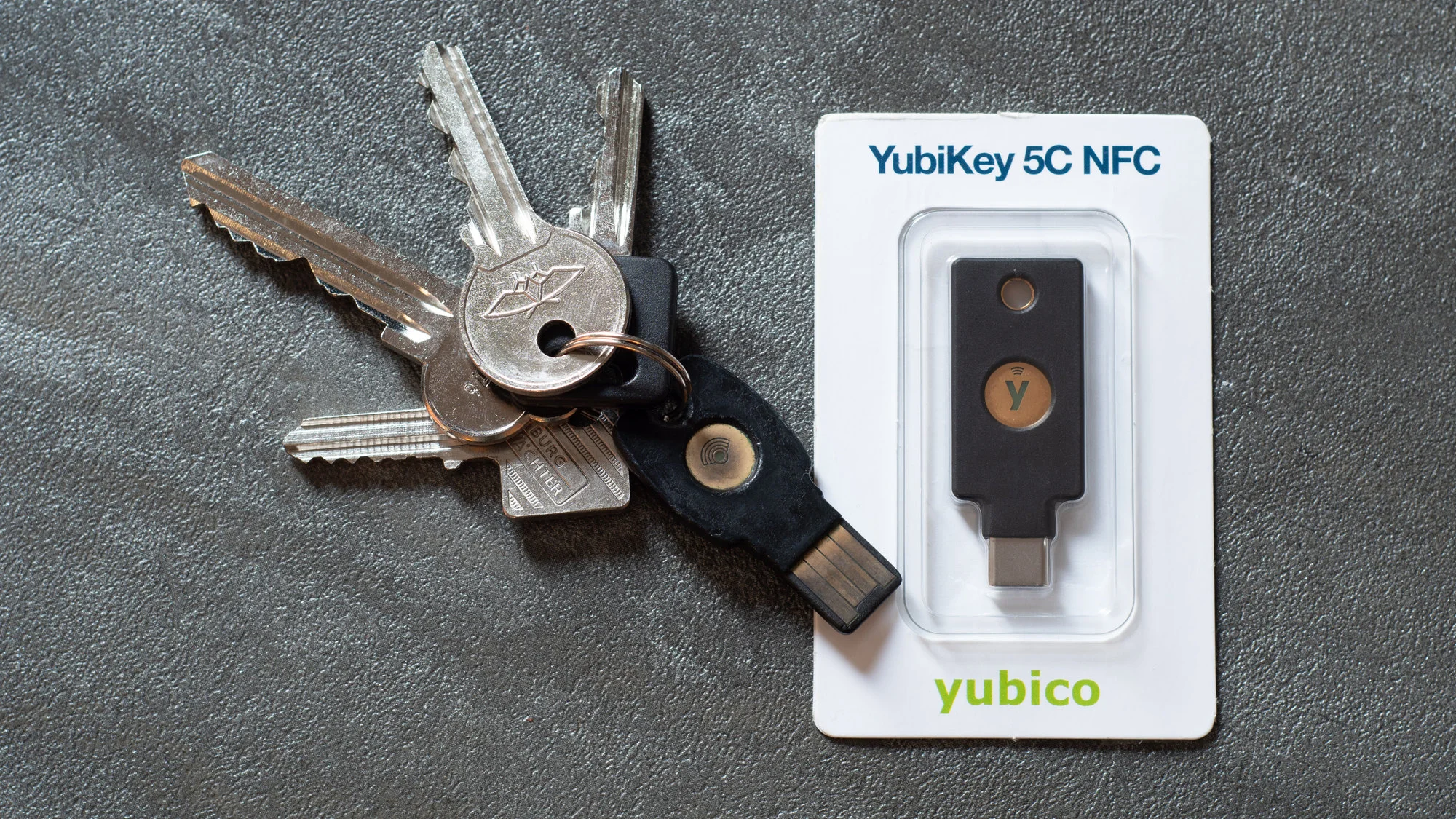
Selected illustration: a YubiKey 5C NFC security key, a visual metaphor for explicit authorization, not a proposed fix for the cache vulnerability. Photo: Daniel Aleksandersen / Wikimedia Commons, CC BY 4.0. Original photograph and attribution. The website may resize or crop the header image.