AI-assisted development is rapidly moving past autocomplete and chat bubbles. The next competitive layer is the infrastructure that decides where agents run, what they can touch, and how teams keep them safe. That is the signal in Coder’s new Coder Agents beta, which the company says can run AI development workflows on self-hosted infrastructure.
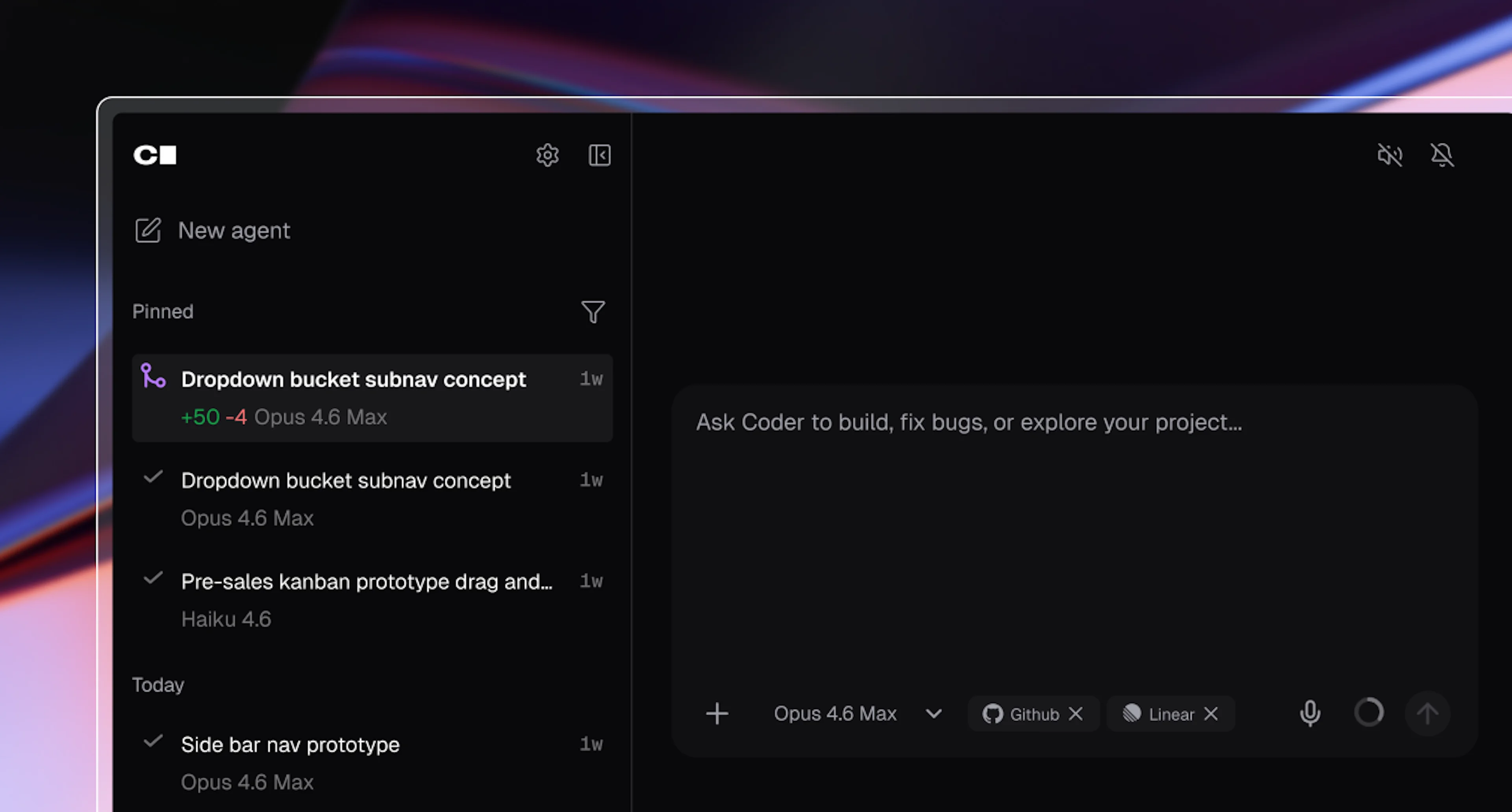
In the official announcement, Coder frames the product as a model-agnostic platform for organizations that want centralized control over models, prompts, MCPs, skills, and network-isolated workspaces. Instead of asking every engineer to assemble a private stack of tools, the platform team can standardize how coding agents operate across the company.
Why this matters
The center of gravity in AI coding has shifted. The first wave was about helping developers write snippets faster. The current wave is about delegating multi-step work: create the branch, generate tests, patch the code, open the pull request, and keep going in the background. Once agents start doing that work, the infrastructure behind them becomes a governance problem, not just a productivity feature.
Coder’s pitch is that teams should not have to choose between powerful agents and operational control. The company says its agents run on the customer’s own infrastructure, which gives platform teams a common policy layer for execution, observability, and model access. That is especially relevant for regulated industries, air-gapped environments, and organizations that do not want development workflows to depend on a single SaaS provider.
What the beta includes
- A conversational interface and API for turning ideas into executed code changes, whether in the foreground or as background tasks.
- Centralized controls for models, prompts, and usage, so teams can define how agents behave across environments.
- Extensibility through skills, MCP, and sub-agents, which gives the workflow room to grow beyond a single coding prompt.
The interesting part is not just that Coder is adding an agent. It is that Coder is treating the agent as an organizational runtime. That is a different product category than the typical developer assistant. It says the hard problem is no longer only generating code. It is running agents safely, repeatedly, and at scale.
How it compares to the rest of the market
Coder is also positioning the beta as a bridge for teams that already use third-party tools. The company says Claude Code and Codex can still run inside Coder Workspaces, which gives organizations a path to keep familiar workflows while moving toward a more centralized control plane. That matters because many teams are already fragmented across multiple agents, model providers, and local developer preferences.
InfoQ’s coverage of the launch makes the same point from a platform-engineering angle: the value is in separating the infrastructure that runs agents from the models they use. In other words, intelligence still comes from the models, but execution, workspace provisioning, and policy can be standardized.
That separation may sound abstract, but it is where the operational pain lives. The more an organization relies on agentic coding, the more it needs answers to questions like: Which repositories can the agent reach? Which prompts are allowed? Which models are approved? How do we log what happened? Who can trigger automated changes from CI, GitHub Actions, or Slack?
The bigger takeaway
Coder Agents is a reminder that AI-assisted development is maturing into infrastructure software. The market is moving from “help me write code” to “help my team run a governed software factory.” That shift favors platforms that can control execution, not just generate suggestions.
If the first era of AI coding was about speed, the next one is about control. Coder is betting that the companies that win will be the ones that can make agents reliable enough to use everywhere, without handing over the keys to a single vendor.