The competition among AI coding assistants is no longer just about who can generate the slickest demo. It is moving into a much more consequential phase: which tool developers trust enough to use on real codebases, under real deadlines, with real review standards.
A recent Wired report described OpenAI’s effort to catch up with Anthropic’s Claude Code, a product that has quickly become a favorite among developers who want an agentic assistant rather than a basic autocomplete tool. That framing matters. The rivalry is not about marketing language anymore. It is about whether these systems can earn a place inside the software delivery process itself.
Why the market is shifting
For a while, AI coding tools were judged mostly on novelty. Could they finish a function? Could they explain an error? Could they draft tests? Those questions still matter, but they are no longer enough. Teams now want to know whether an assistant can work across a repository, respect access boundaries, avoid reckless changes, and support the way engineers actually ship code.
That is why the race between OpenAI and Anthropic feels different from the first wave of coding copilots. The winner will not just be the model with the best benchmark scores. It will be the platform that fits best into review workflows, CI pipelines, security policies, and day-to-day developer habits.
In practice, that means the product has to do more than suggest text. It has to behave like part of the engineering stack. Developers expect it to understand context, preserve intent, avoid breaking tests, and surface uncertainty instead of bluffing its way through a task. Once a tool starts editing code, the tolerance for randomness drops fast.
Claude Code set the pace
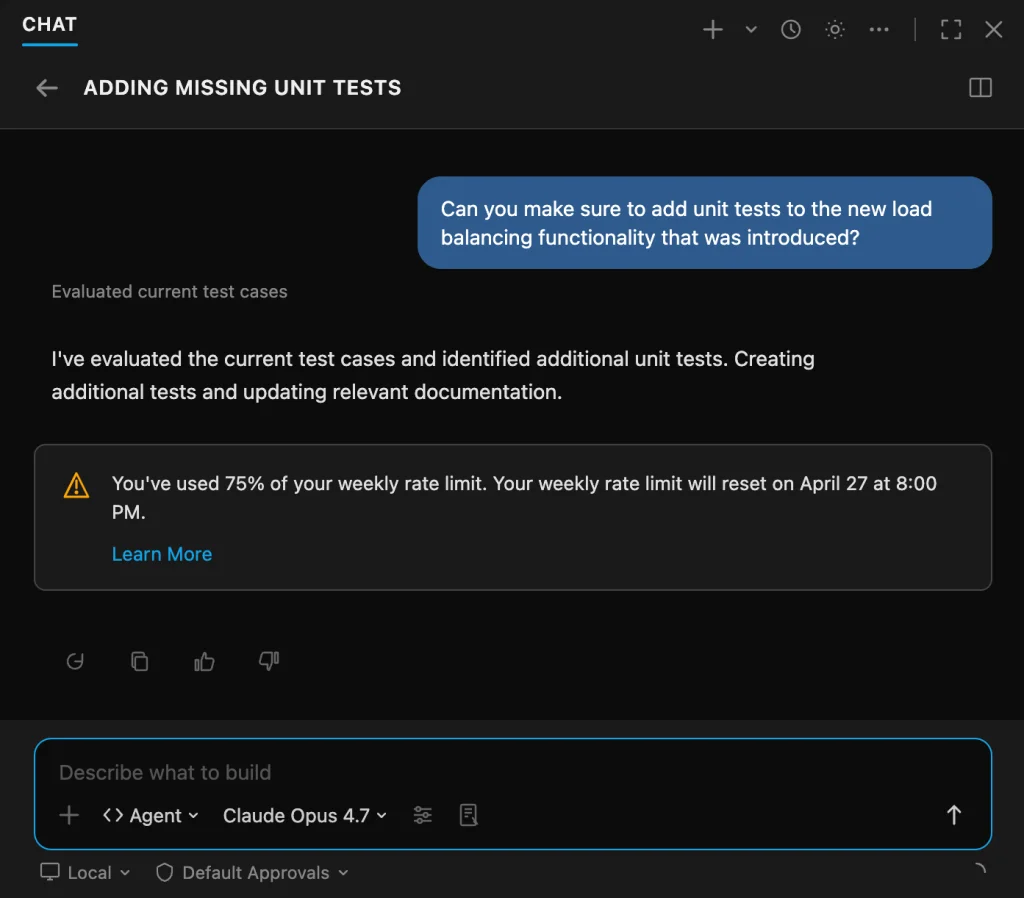
Anthropic’s Claude Code has been popular because it feels closer to an agentic collaborator than a chat box. It can help with multi-step tasks, inspect context, and make edits that are more aligned with real engineering work. That matters because many teams are already past the phase of asking whether AI can write code at all. They are asking whether AI can reduce friction in the most annoying parts of development: refactors, bug triage, test updates, and repetitive maintenance.
OpenAI’s challenge is therefore not simply to add another model into the market. It has to show that Codex can compete on workflow quality. The assistant needs to be useful when the repository is large, the task is messy, and the cost of a bad change is high. That is a much harder benchmark than generating a clean snippet in a demo environment.
This is also where trust becomes the differentiator. A coding assistant that is slightly less creative but more predictable can be more valuable than one that sounds impressive and then derails the branch. Engineering teams care about consistency. They care about whether the assistant can be audited. They care about whether they can explain to a security reviewer why a model suggested a change and how that change was validated.
What developers actually want
The strongest demand signal in the market is not “make the model smarter.” It is “make it easier to ship.” Developers want tools that lower cognitive overhead. They want an assistant that can gather context, suggest a patch, run through the likely edge cases, and leave the codebase in a state that is easy to review.
That creates a new set of product expectations:
- better repository awareness
- tighter integration with tests and linters
- clearer explanations for edits
- controls for permission and scope
- stronger guardrails on destructive actions
Those are not glamorous features, but they are the ones that turn an AI assistant from a toy into infrastructure.
It also changes how teams evaluate vendors. The buying question is no longer only “Which model is best?” It is “Which platform can we safely standardize on?” That includes logging, governance, data retention, reliability, and how much control the organization keeps over code that is generated or modified by AI.
The real competition is enterprise readiness
At consumer scale, hype can carry a product for a while. In enterprise software, trust usually wins. That is why the next stage of the coding-assistant market will likely be decided by boring details: audit trails, admin controls, policy enforcement, and the ability to fit into existing software engineering practices without creating new operational risk.
OpenAI’s push to catch up with Claude Code suggests the company knows this. To win over serious development teams, it must prove that Codex is not just powerful, but dependable. And dependability in this category means understanding code structure, limiting bad edits, and failing safely when the task is unclear.
That is a big change from the early AI era, when the goal was simply to make users wow at the output. Now the output is only half the story. The other half is whether the assistant can earn a place in a production workflow that already has tight constraints and little patience for mistakes.
Why this matters now
There is a broader lesson here for the software industry. AI coding tools are no longer experimental sidecars. They are becoming part of how teams build, test, and maintain software. As that happens, the market will reward products that are useful in the ugly middle of engineering work: the debugging sessions, the patch reviews, the legacy code, the repetitive cleanup, and the moments when a developer needs help without losing control.
OpenAI’s Codex race is therefore not just a product story. It is a signal that the developer tools market has entered a more mature phase. The companies that win will be the ones that combine capability with restraint.