Security fixes become an agent workflow, not an automatic decision
On 15 October 2026, GitHub announced the general availability of agentic autofix for code scanning alerts. Instead of merely suggesting an edit beside a warning, Copilot can explore relevant files, propose a change, rerun CodeQL, iterate, and open a draft pull request. The operational implication matters more than the label: security remediation is becoming a delegated engineering task with an explicit review boundary. An agent can prepare evidence and implementation; a human still needs to decide whether the change is safe to merge and release.
This is useful news for teams facing a vulnerability backlog, but it is not a promise of autonomous security. A finding disappearing from one analysis is valuable evidence, not proof that an application remains correct. The right adoption question is therefore not simply whether Copilot can close alerts. It is whether the team can turn its proposed fixes into understandable, independently checked, accountable changes without moving the bottleneck into an overloaded review queue.
What GitHub actually announced
According to the release announcement, the agent investigates the repository beyond the initially affected location, generates a fix, and validates it by rerunning CodeQL. The resulting pull request includes an explanation of the change, why it closes the alert, and the validation steps taken. Reviewers can ask for further changes through pull request comments or the repository's Agents tab. This creates a useful feedback loop: delegation does not have to end with accepting or rejecting a finished patch.
The announced availability covers GitHub Code Security and GitHub Advanced Security customers on GitHub Enterprise Cloud, including data residency deployments. Access requires an enterprise policy to be enabled, followed by organization or repository configuration, and a defined Copilot billing method. These are product access conditions, not a substitute for a team's own authorization policy. The person allowed to enable a feature and the person accountable for accepting a particular security change need not be the same.
A bounded capability, with costs and scope
The announcement specifies that agentic autofix handles code scanning alerts on the default branch. Alerts found only on a pull request or another branch cannot be assigned to Copilot through this workflow. Teams can assign an individual alert, or select up to 25 alerts from a repository or security campaign for one pull request. An API route also exists, using the code scanning alert update endpoint and the documented Copilot bot assignee.
Capacity deserves attention alongside eligibility. GitHub says this workflow consumes AI Credits from the Code Security budget and GitHub Actions minutes. That makes a remediation campaign both a security operation and a resource allocation decision. Start with a controlled volume, check actual usage, and establish who can expand the campaign. Selecting the maximum available batch is not automatically efficient: one large patch can cost more human review time than several smaller, well-scoped fixes.
Closing an alert is not proving the whole system safe
CodeQL evaluates the program through specific queries and analysis assumptions. Rerunning it helps determine whether the targeted condition remains detectable. It does not establish every property that matters to a service owner. A patch can remove a dangerous operation while breaking an integration, changing an authorization rule, or silently altering error handling. The product's validation loop should therefore join existing tests and review controls, not replace them.
GitHub's documentation also describes agentic remediation as best effort and identifies limits around validation for custom queries, the security-extended suite, and third-party findings. At the time of checking, that documentation still used preview wording while the dated announcement stated general availability. Treat the announcement as the release-status reference, and verify the effective capabilities in your tenant. Neither a marketing milestone nor an older documentation paragraph should override an observed validation gap.
An illustrative fix shows where judgment belongs
Consider a hypothetical service that constructs a database query using request input. An agent may replace string concatenation with parameterized execution and demonstrate that the original injection alert no longer appears. That is a promising patch. A reviewer must still inspect whether filtering, pagination, transaction boundaries, and tenant isolation behave as intended. Removing an injection pattern does not automatically prove that a user cannot request another customer's records.
The review should ask for evidence on both sides of the security boundary: a malicious input is rejected or handled safely, and legitimate inputs still produce the expected result. Where authorization is involved, add an explicit cross-user or cross-tenant test. These are recommended engineering practices, not claims about tests the product automatically supplies. The human role is to define what a successful repair means for the application, rather than letting the original scanner finding define the entire acceptance contract.
Give the agent a remediation contract
Before assignment, record a compact contract in the issue, alert context, or approved repository instructions. Describe the affected behavior, the security property to preserve, the files or interfaces that require special care, and the required tests. State whether dependency upgrades, schema changes, public API changes, or workflow edits are outside scope. An agent can reason more effectively when the desired outcome and prohibited shortcuts are concrete.
A useful contract might require preserving the endpoint's response format, keeping existing authorization checks, adding a regression test, and avoiding unrelated refactoring. It should also identify the human owner and escalation conditions. If the agent discovers that a narrow fix requires a broader architectural decision, it should return a proposal rather than silently enlarge the task. Responsible delegation means granting enough freedom to investigate while keeping decisions about business behavior and accepted risk with accountable people.
Protect the checks from the patch they evaluate
A security patch can touch tests, scanner configuration, dependencies, and build scripts as well as application code. Review these surfaces explicitly. A green status loses value if the change suppresses the relevant query, narrows the scanned paths, removes the failing assertion, or bypasses the job that would have exposed the problem. Treat modifications to validation infrastructure as a distinct decision requiring a clear rationale.
For sensitive repositories, keep required checks and branch protections enforced through controls the remediation agent cannot simply edit around. Ask reviewers to distinguish between a legitimate test update and a weakened acceptance criterion. This does not assume malicious intent from the model; a system optimizing for task completion can still find an easier route than the one your policy intended. The important safeguard is structural independence between the proposed implementation and the authority that decides whether its evidence is sufficient.
Batch by shared cause, not by the maximum button
The option to group up to 25 alerts can help when findings share one underlying defect or remediation pattern. It becomes harder to review when unrelated authorization, parsing, file handling, and dependency problems arrive together. A reviewer should be able to explain the logic of the entire patch, not merely sample a few changes and assume the rest are equivalent. Reviewability is a practical safety constraint.
Begin with individual findings or small groups that have the same owner and a coherent failure mechanism. Separate changes that require different domain expertise or release strategies. If a batch produces a sprawling diff, request that it be split before approval. The goal is not to minimize the number of pull requests at any cost. It is to reduce the total time needed to reach a well-supported decision, including investigation, testing, reviewer discussion, and any later rollback.
Make the human review a decision, not a ceremony
A meaningful review can follow a short, repeatable sequence. First, identify the original vulnerability and the behavior the patch is intended to preserve. Second, inspect the changed code and any changes to its checks. Third, examine the validation evidence, including the exact analysis and test runs. Finally, decide whether the residual risk fits the service's release policy. Each step should be understandable to someone other than the agent that wrote the explanation.
- Can the reviewer connect each material change to the stated vulnerability?
- Do tests cover the unsafe case and important legitimate behavior?
- Were scanner settings, permissions, or required checks weakened?
- Does the change affect authentication, authorization, persistent data, or external contracts?
- Is an owner available to monitor deployment and coordinate a rollback?
Automated review can help answer these questions, but it should not become a circular conversation in which one agent's confidence is validated only by another agent's summary.
Keep release authority separate from implementation
A draft pull request is a collaboration artifact, not a deployment authorization. Retain the repository's normal approval requirements, service ownership, and release controls. Security-sensitive changes may deserve a second reviewer with domain expertise even when the patch is small. Conversely, a routine low-risk repair can move quickly when its contract and evidence are clear. Human control does not require slowing every change equally; it requires making the level of scrutiny proportional to the possible impact.
After merging, use the service's established deployment and monitoring process. Check that the intended artifact was released, that operational signals remain healthy, and that the finding's status matches the actual deployed situation. Where the team uses gradual rollout or rollback mechanisms, include them in the remediation plan. The agent's successful session is only one stage in the lifecycle. The accountable owner remains responsible for the result users actually experience.
Measure repaired risk, not generated activity
A remediation dashboard should distinguish proposals from accepted and deployed fixes. Counting closed sessions or opened pull requests can reward activity while hiding review debt. More useful measures include time to a verified repair, reviewer effort, patch rejection reasons, regressions after deployment, and the age of high-risk findings. Track usage costs alongside these outcomes so that apparent automation savings are not purchased through excessive compute or additional human rework.
Do not invent a universal productivity gain from one vendor announcement. Run a small pilot against a clearly defined baseline and document which categories of finding benefit. Record failures too: missing context, unsupported validation, overly broad patches, or repeated inability to preserve behavior. Use that evidence to improve instructions and decide where delegation is appropriate. An effective program expands because it demonstrates trustworthy results, not because the organization has already committed to maximizing agent usage.
The practical lesson: automate preparation, retain responsibility
GitHub's announcement is a concrete step beyond generating code snippets: investigation, implementation, scanner feedback, and a reviewable proposal are becoming one workflow. That can help teams address security debt that would otherwise remain unscheduled. But the value comes from integrating the agent into a disciplined engineering system, not from treating the word autofix as permission to bypass it.
For a first adoption, select a small, owned set of default-branch alerts, define acceptance criteria, verify costs and effective access, and require independent checks before merging. Expand only when the evidence supports it. The governing principle is simple: let AI do more of the remediation work while humans retain command of scope, acceptance, and release. A scanner can report that a pattern has disappeared. Only an accountable team can decide that the resulting software is ready for its users.
Sources and illustration
GitHub announcement, 15 October 2026; GitHub autofix documentation. Product statements are attributed to GitHub; the workflow recommendations and hypothetical example are editorial analysis.
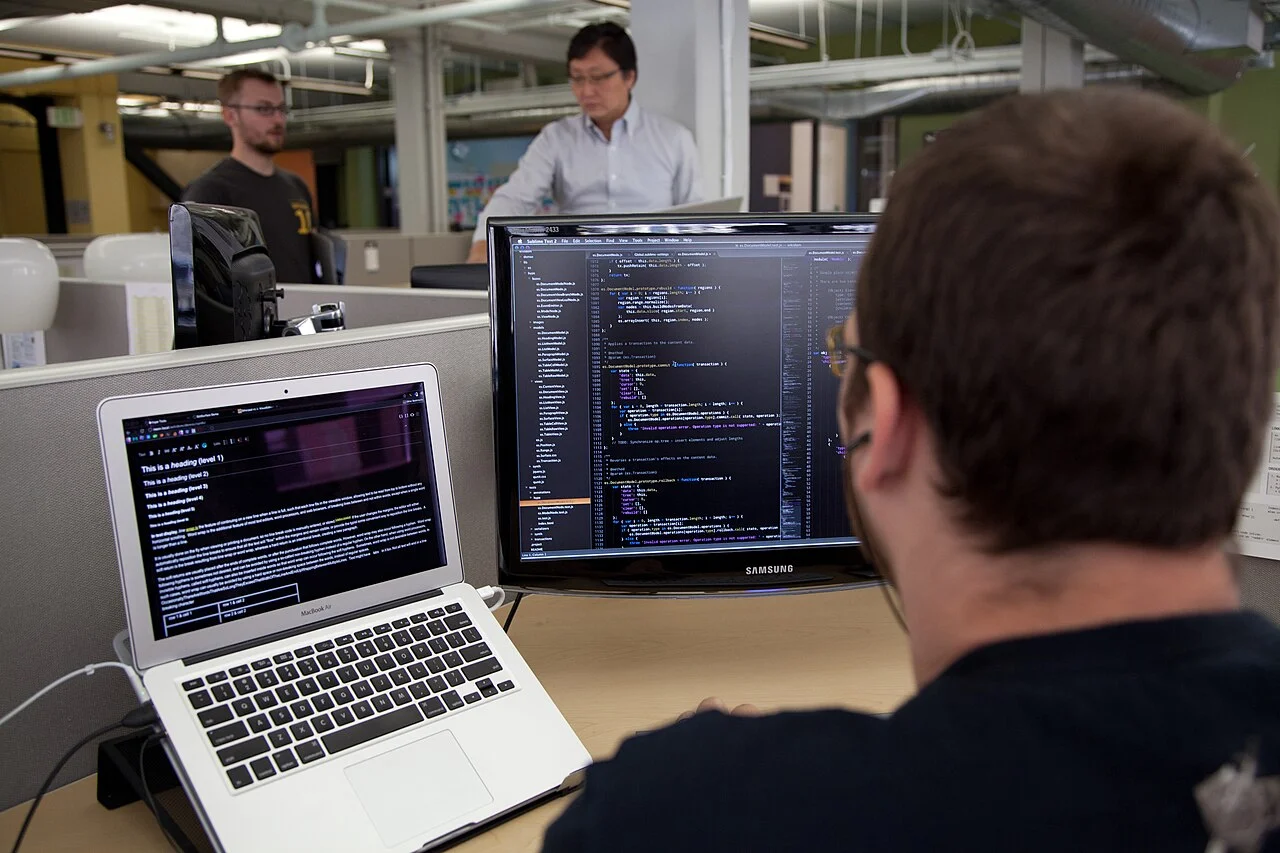
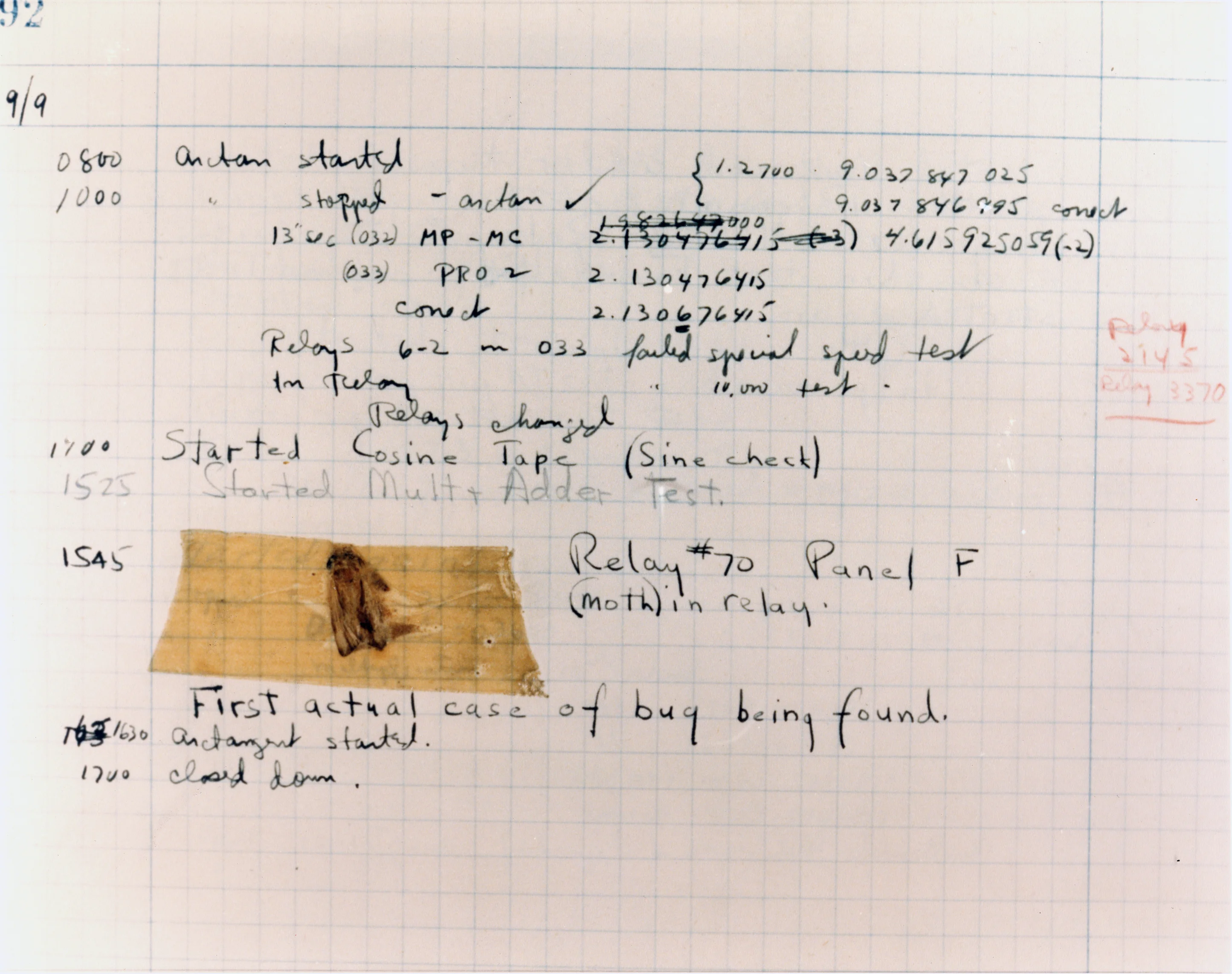
Selected illustration: Wikimedia Hackathon 2013, Amsterdam. Photo: Sebastiaan ter Burg / Wikimedia Commons, CC BY 2.0, unmodified original. Photo source. This archival illustration does not depict the announced product.