Cursor adds voice: useful engineering, not hands-free authority
On November 6, Cursor introduced realtime voice conversations with coding agents. The interesting part is not that an editor can speak. It is that a developer can discuss a task, ask about a diff and clarify the next step while a coding agent continues working. For senior engineers, who often spend more time reconstructing context than typing code, that could remove a surprisingly expensive interaction cost.
This article examines the documented release and proposes concrete workflows, not measured results from a hands-on benchmark. The examples are adoption recipes to evaluate on your own repositories. The central principle is simple: use speech to accelerate understanding and coordination, but preserve written scope, inspectable evidence and human approval for consequential changes. A more natural interface must not quietly become a broader permission model.
What actually changes in the agent workflow
Cursor distinguishes two components. Grok Voice handles listening and speaking; the coding agent in the chat keeps the model already selected for coding. When you request an implementation, the voice agent hands work to that coding agent. Conversation can continue while execution proceeds. This separation matters: choosing a different voice is not the same as changing the model responsible for the patch.
The documentation describes read-only lookups of diffs, runs and agents, searches through that agent’s earlier messages and calls, and switching between workers in a Project. However, the conversational layer can also hand off coding tasks. Do not describe the entire feature as read-only. Its inspection capabilities and its ability to initiate work are different surfaces, and your team should govern them accordingly.
Install or access it without adding another toolchain
Download or update Cursor from its official download page. It lists desktop packages for macOS, Windows and Linux, including Linux package formats and architecture variants. The release also supports voice chat in the Agents Window, the IDE, the web interface and Cursor for iOS. Choose the surface your organization already permits; adopting voice does not require moving a local repository to a cloud execution workflow.
Start with a disposable branch and a small, non-sensitive repository. Sign in with a Cursor account: the documentation explicitly says API-key-authenticated sessions cannot start voice chat. Allow microphone access only for the approved application or browser. Before exposing proprietary code, check your organization’s account, model, privacy and execution policies. Availability of an interface is not evidence that every plan, network or corporate configuration supports your intended usage.
Start the right kind of conversation
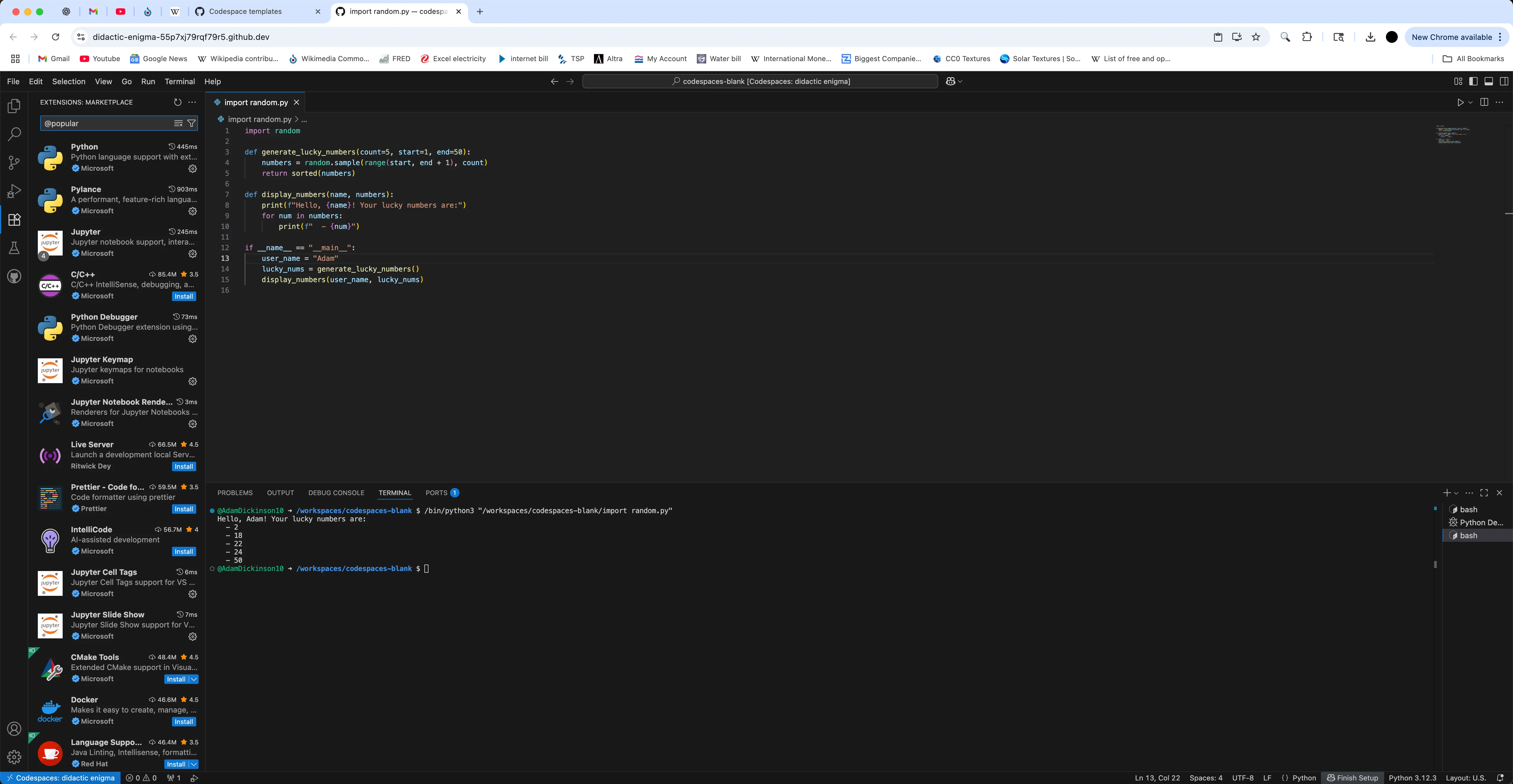
Open an agent chat. In the IDE, it must already contain at least one message. When the agent is idle and the input is empty, click the waveform button labelled Start voice chat; the adjacent microphone button starts dictation instead. Grant microphone permission when prompted. If the waveform is absent, first clear the input and wait for work to finish rather than searching for a new extension.
The distinction from dictation is operationally important. Dictation produces text that you review and send. Voice chat is a two-way conversation that can hand work to the coding agent. For a precise command containing a migration identifier or unfamiliar symbol, dictation followed by textual review may be safer. For discussing alternatives while viewing a diff, conversation can be more convenient. Keep both available rather than treating voice chat as a universal replacement.
Use case one: reconstruct an unfamiliar repository
A useful first assignment is explanation without modification. Ask: “Trace how an authenticated request reaches the invoice export. Name the entry point, authorization check, persistence boundary and existing tests. Do not edit files or run installation scripts.” Then inspect the returned paths yourself. Ask the agent to distinguish direct code observations from architectural assumptions and to leave the resulting map in the chat.
This is valuable when joining an incident or reviewing an unfamiliar service. You can keep the relevant files visible while asking follow-up questions, rather than repeatedly composing messages. The acceptance criterion is not a convincing narrative: it is a short path-based map that another developer can verify. If the agent cannot locate authorization or finds multiple entry points, record that uncertainty instead of allowing a smooth spoken answer to hide it.
Use case two: debug from evidence, not a spoken guess
For an intermittent failure, begin with a sanitized stack trace and an exact reproduction command already approved for the project. Ask the agent to identify the failing boundary and propose competing hypotheses before changing code. A useful spoken follow-up is: “Which observation would distinguish stale cache state from a timezone conversion bug?” Require the answer to reference actual logs or tests, not generic debugging advice.
Only then authorize a narrow experiment on the development branch. Request the command, exit status and relevant output in writing, followed by a minimal regression test. If the failure cannot be reproduced, the result is an unresolved investigation, not a verified fix. Voice can shorten the hypothesis loop, but should never turn confidence in a conversation into evidence that the original defect has disappeared.
Use case three: interrogate a diff before approving it
During review, ask the agent to walk through changed behavior rather than narrating every line. For an authorization patch, ask which requests were previously permitted, which are now rejected, and which tests exercise both outcomes. Follow with: “What is the strongest reason this change could still be unsafe?” Keep the diff open and verify the claims against implementation and tests.
This works especially well for review preparation: the author can extract assumptions and missing cases before requesting a teammate’s time. It is not independent approval. The same agent that produced a patch may repeat its original misunderstanding when explaining it. Preserve existing code-owner rules and required reviews. A spoken summary is a navigation aid; the approval should remain attached to a particular commit and the reviewer’s inspection of its actual changes.
Use case four: refactor behind explicit boundaries
Consider replacing duplicated retry logic. Start by describing invariants: preserve public signatures, keep timeout behavior, retain cancellation propagation and avoid new dependencies. Ask for an inventory of call sites and a written plan first. Approve only the small extraction, not a general cleanup. While the coding agent works, use conversation to clarify a confusing branch or ask why a particular caller requires different behavior.
The handoff should finish with changed files, executed tests and remaining exceptions. Specifically request tests for exhausted retries and cancellation, not merely the success path. If the diff expands into unrelated formatting or dependency upgrades, stop and reduce scope. The productivity opportunity is maintaining design context while implementation proceeds; it is not delegating every adjacent improvement the agent discovers.
Use case five: coordinate work without pretending speech is a dashboard
For parallel tasks, ask bounded status questions: which worker is blocked, what decision is needed, and what artifact demonstrates completion? Cursor documents switching Project workers during a call, but also says the start button is hidden in worker and subagent chats. Treat those as different interaction paths: start from a supported parent conversation rather than expecting a call button everywhere.
Ask each workstream to leave a durable checkpoint: branch or commit, scope, test result and next action. Spoken updates are helpful while you inspect another file, but they are easy to miss and difficult to scan. A written checkpoint prevents repeated status questions and helps teammates who were not present. Do not let conversational convenience encourage more parallel work than your review capacity can safely absorb.
A practical protocol for handing off a task
Before authorizing edits, state five things: objective, allowed scope, forbidden actions, required evidence and stopping condition. For example: “Add regression coverage for empty export results. Touch only the export tests. Do not modify production code, install packages or access external services. Run the existing focused test command and report its exit status. Stop if the fixture requires a schema change.”
Then ask the agent to repeat the task in writing and correct any misunderstanding. This is a team operating procedure, not a claim that spoken prohibitions enforce a sandbox. Real limits belong in tool permissions, credentials, branch protection and execution isolation. Before approving a subsequent action, inspect the proposed command or diff. Especially avoid vague utterances such as “do the rest” after discussing several alternatives; name the one you actually authorize.
Privacy: distinguish retention, transmission and execution
Cursor says voice chat runs with zero data retention when Privacy Mode is on. That is a vendor statement about the feature, not a claim that audio is processed entirely on your device. Its broader governance documentation explains that AI requests send prompts and code context to providers, and that cloud-agent execution has its own repository-handling architecture. Review the relevant configuration and contractual terms rather than collapsing these into one privacy checkbox.
Use synthetic examples for the initial trial, avoid reading credentials or customer identifiers aloud, and consider who can overhear the call. Cloud call transcripts normally sync across devices while live, unless Privacy Mode is on, according to the voice documentation. Do not assume a synced transcript will always exist under every setting. Decide which written engineering artifacts your team actually needs, and store only those through approved channels.
Limitations that should influence the rollout
Voice requires a signed-in account and microphone access. There is a daily call limit; the documentation does not provide a universal numeric allowance, so do not build a workflow around an assumed unlimited entitlement. Idle calls normally end after about ten minutes of user silence when no work is running. Certain chat types do not expose the start button, including archived chats, another teammate’s chats and Claude Code chats.
There are also ordinary engineering limitations that the release does not eliminate. Speech can miscommunicate filenames, negation or technical vocabulary. Audio is less scannable than text and can disturb a shared office. Network quality and conversational latency may interrupt concentration. These are reasons to offer voice as an optional interface with a text fallback, not to require it as the default for every engineer or every task.
Test the productivity hypothesis instead of quoting a multiplier
The plausible gain is lower coordination cost: less time composing exploratory prompts, faster clarification and fewer switches away from the artifact being inspected. None of that proves faster delivery. A conversation can also create additional work, obscure an important detail or generate an unnecessarily broad patch. Evaluate complete tasks, including review and correction, instead of counting how many prompts you avoided typing.
For a small pilot, compare similar repository-navigation, debugging and review-preparation tasks using text and voice. Record time to a verified answer, correction rounds, reviewer effort, failed assumptions and any accidental scope expansion. Keep developer preference and accessibility feedback alongside the numbers. These are proposed measurements, not published performance claims. Retain voice where it improves the full workflow without weakening quality, and disable it for task categories where it adds friction.
Keep the release gate outside the conversation
An agent saying “done” should lead to inspection, not deployment. Require a concise written handoff containing the exact commit, behavioral change, executed checks, untested areas and rollback considerations. Read the diff, confirm test results and use the same protected review and release mechanisms that apply to human-authored changes. If deployment is outside the task, keep the credentials and tools for it outside the agent’s reach.
The same rule applies when using the mobile interface for a status update. Hearing progress away from the desk can be convenient; approving a risky change without inspecting its evidence is a different decision. Treat spoken requests as input, written artifacts as review material, and protected platform controls as the enforcement boundary. That separation preserves accountability even when the conversation feels as natural as talking to a teammate.
Make success criteria visible before the first call
A practical pilot needs an acceptance sheet that exists before the demonstration. For repository navigation, require correct paths and an explicit statement of unresolved uncertainty. For debugging, require either a reproducible failing case and a verified correction, or an honest unresolved result. For review preparation, require a behavior-focused checklist whose claims the reviewer can inspect. These criteria prevent a pleasant interaction from being mistaken for a successful engineering outcome.
Keep the experiment small enough to audit. Use the same approved tools and comparable task difficulty for both interfaces, and record which coding model was selected. Because the voice model and coding model are separate, changing both at once would make the comparison difficult to interpret. Also distinguish time spent speaking from total elapsed time, including investigation, waiting, verification and cleanup. A faster briefing is not automatically a faster completed task.
Finally, retain the ability to stop. If a spoken instruction is ambiguous, return to text and restate the scope. If an agent proposes a command that reaches outside the repository, inspect it before execution and apply the normal approval process. Repository content and retrieved documentation remain untrusted task data, even when an agent reads them aloud in a familiar voice. Never treat a spoken paraphrase of a file’s instructions as permission to reveal a secret, broaden tool access or bypass a required review.
Where I would start on Monday
Start with repository explanation or review preparation, not production incident remediation. Update the approved client, verify the account and microphone settings, check Privacy Mode, and choose a branch with no production credentials. Run one bounded investigation, ask for a written map or review checklist, and verify every important claim. Then compare the experience with the normal text workflow before expanding access.
Cursor’s release makes a credible case for conversation as an engineering interface. Its best use is helping an experienced developer remain oriented while agents carry out bounded work. The point is not to remove the keyboard, the reviewer or the release gate. It is to reduce the effort needed to ask the next good question, while keeping consequential decisions deliberate, visible and human-owned.